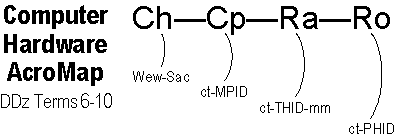
ROM (rawm) is an acronym for Read Only Memory.
ROM
Chip
that Permanently Holds Instructions & Data.
Acronym:
Ro = ct-PHID (pronounced See-tee FID).
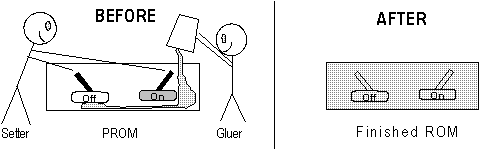
Off/on switch patterns in ROM are preset and fixed in position by the manufacturer. Some ROM chips contain basic startup instructions that are activated each time you turn on the computer. Other ROM chips contain instructions for operating certain devices, like your monitor. These instructions are put into ROM because it's quicker than having to go out and get them from the disk every time they're needed.
ROM Features
Read Only
The computer can "read" the switch settings in ROM but can't
"write" to it. Hence, any instructions and data stored inside are
permanent--they cannot be changed or erased.
Just as volatile means temporary (see RAM), non-volatile means permanent. The switches in ROM are "hardwired" or fixed in position. No power is required to hold its switches On.